Demand-Led Content Selection
Selected content with stronger natural resonance for YouTube's active audience segments.
YOUTUBE · DISTRIBUTION SYSTEM · 2026
A client's YouTube channel entered August 2026 with weak distribution, recording 8,689 views in July. I took over active management on August 5, rebuilding the publishing loop around content selection, platform-native packaging, consistency, and audience feedback. Within approximately one month of active management, total views crossed 6,083,084 without paid promotion.
The channel had content. It didn't have momentum.
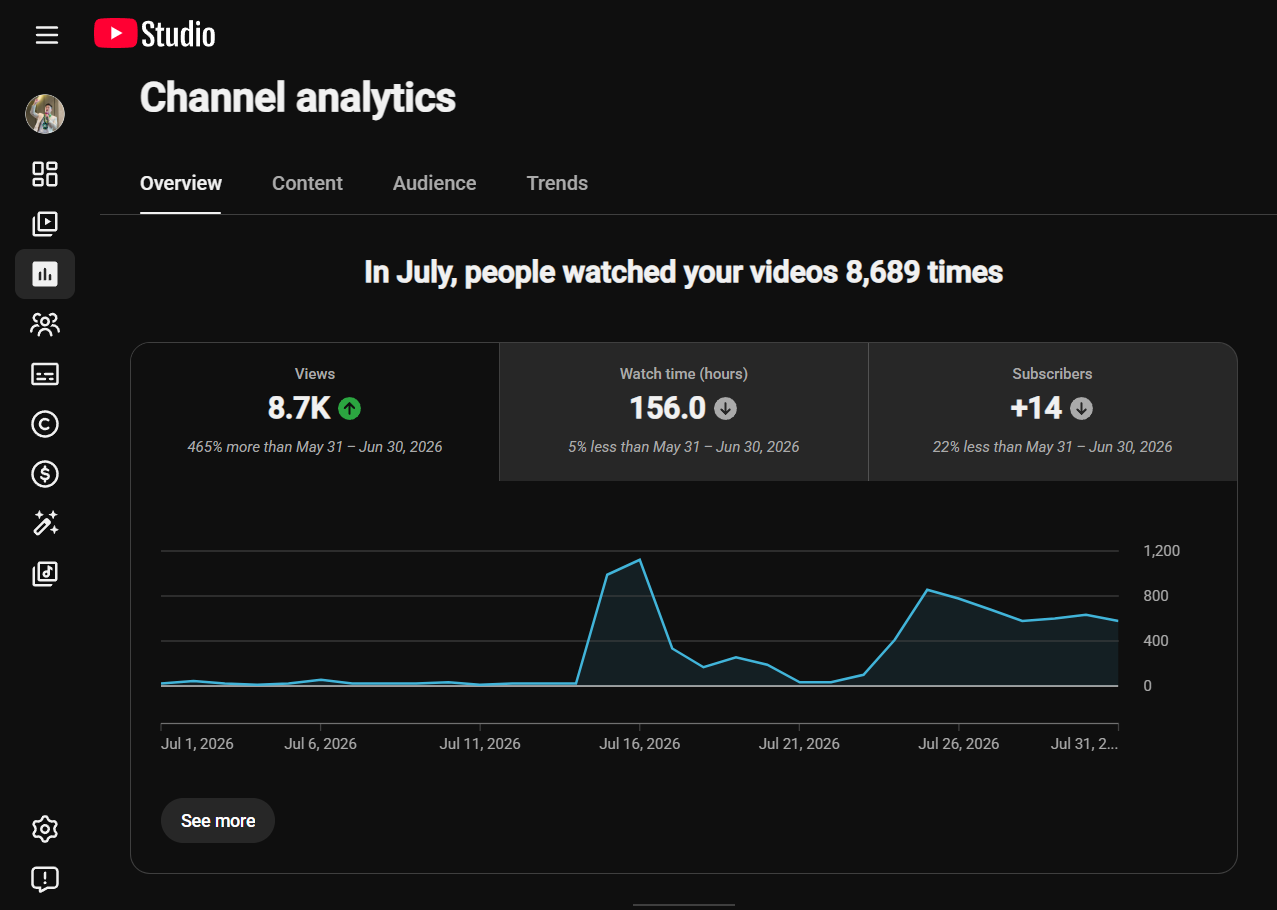
When I received access, the issue wasn't simply that the channel needed more uploads. Existing content wasn't translating into meaningful distribution. YouTube Studio recorded just 8,689 views across the entire month of July 2026.
The problem wasn't volume. It was the distribution loop.
Publishing more of the same wasn't enough. The channel needed a stronger connection between what was selected, how it was packaged for YouTube, what the audience responded to, and what the next upload should learn from that response.
Which topics and formats have the highest inherent audience demand on YouTube?
How should the visual hook, title, and presentation work specifically for YouTube's recommendation engine?
How could publishing become a disciplined, repeatable process instead of isolated uploads?
Which early retention and distribution signals should influence subsequent uploads?
Every upload became feedback for the next one.
Active management began on August 5, 2026. Instead of treating YouTube as a passive repost destination, I rebuilt the publishing cadence around four key operational changes:
Selected content with stronger natural resonance for YouTube's active audience segments.
Refined hooks, titles, and visual framing specifically formatted for short-form feed retention.
Established a consistent daily release schedule to give the recommendation algorithm steady data signals.
Traced early retention, engaged views, and swipe-away rates to continuously adjust subsequent releases.
The channel reached 6M+ views as distribution continued to compound.
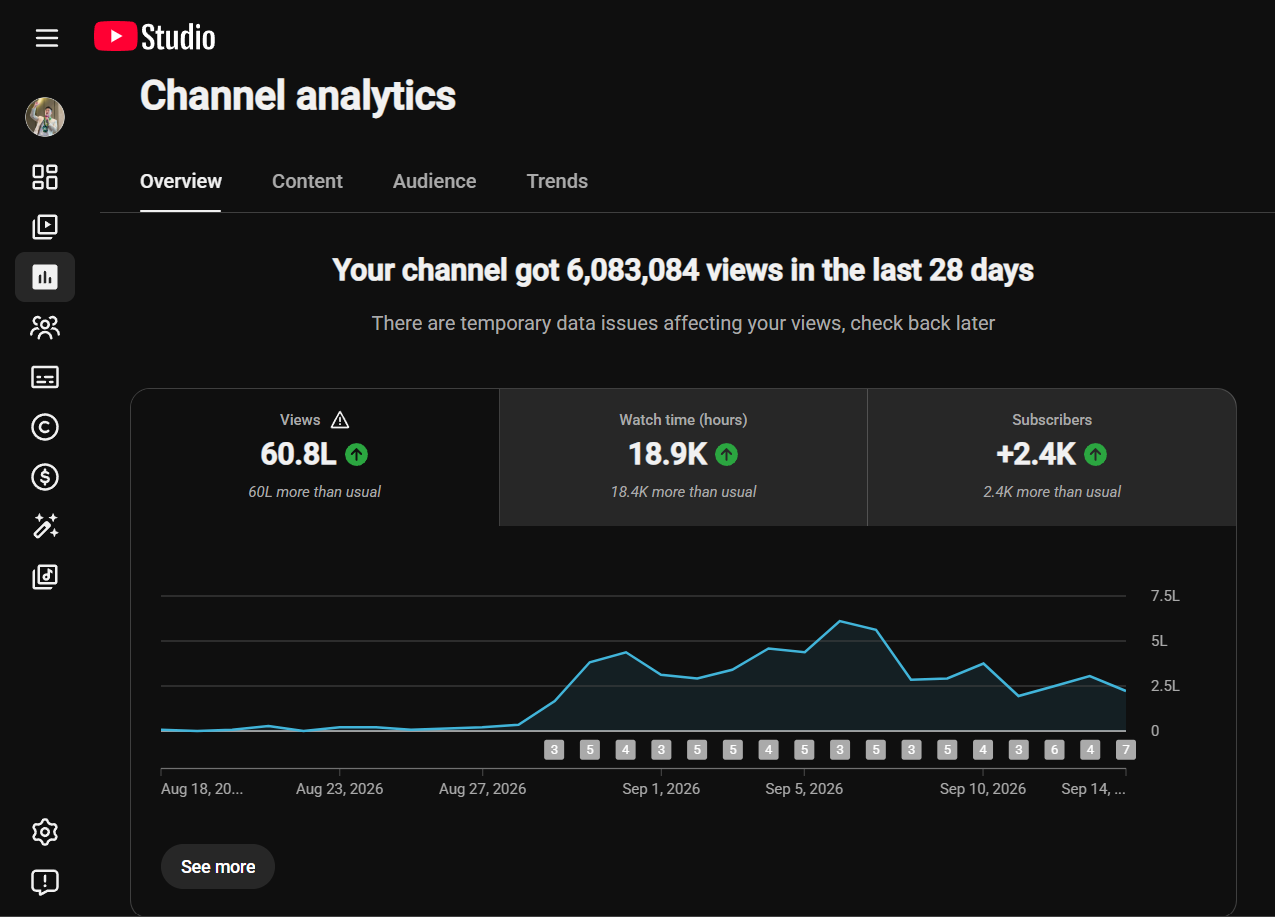
Following the August 5 takeover, the channel scaled to 6,083,084 views (rolling 28-day window ending September 14, 2026) without paid promotion.
Total Monthly Views (Jul 1–31)
Total Channel Views in 28 Days (Aug 18 – Sep 14)
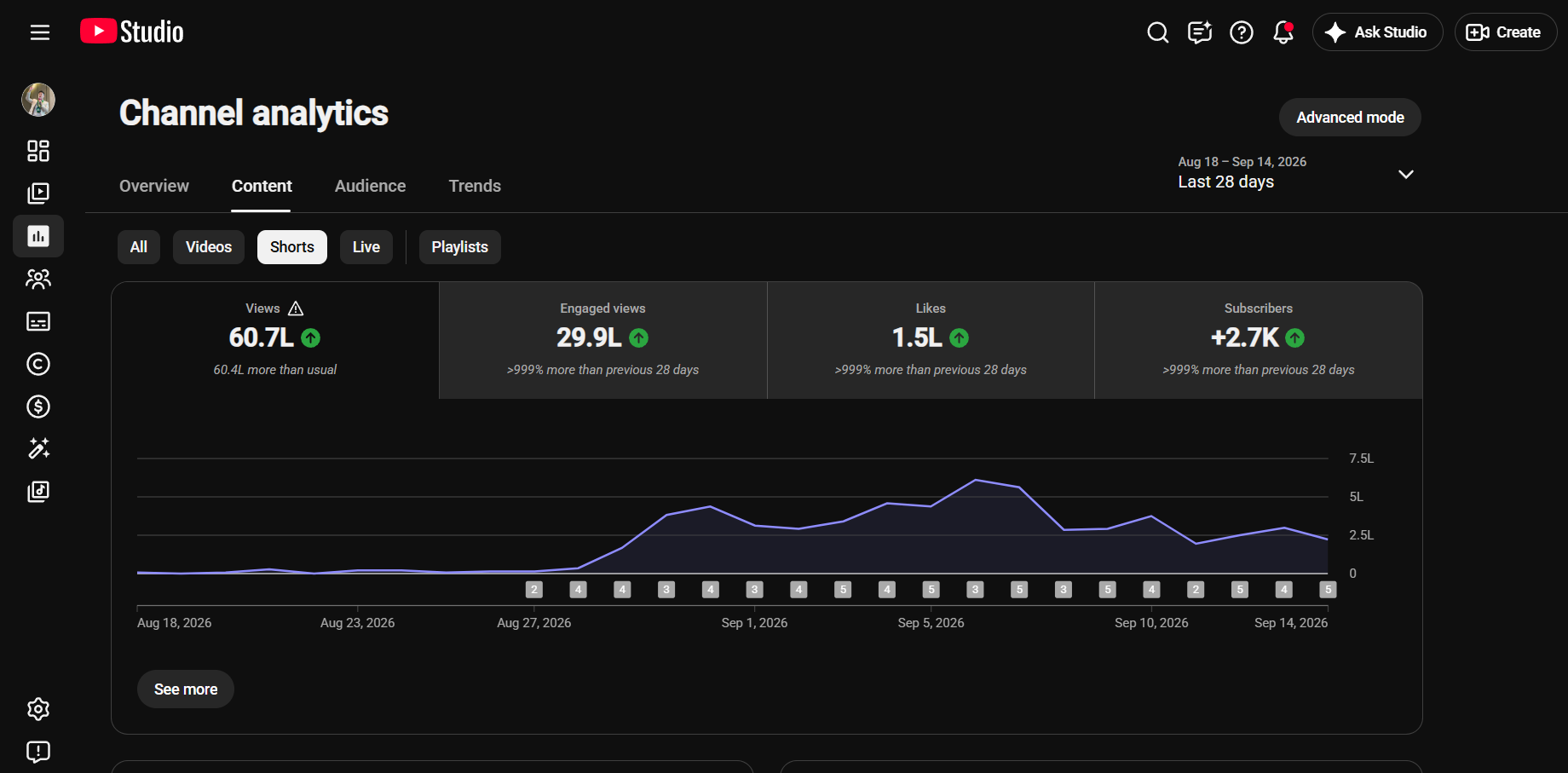
6.07M views and 2.99M engaged views driven by short-form iteration.
The growth wasn't an isolated spike. The short-form distribution loop generated 6.07M Shorts views, 2.99M engaged views, and 150,000 likes in the 28-day window ending September 14, 2026. At the same time, watch time reached 18,900 hours.
From stagnation to compounding momentum.
The interesting part isn't the 6M+ views. It's how quickly the system responded.
The channel didn't need a completely new identity. It needed a better feedback loop between content selection, platform packaging, publishing cadence, and audience response. Once that loop started working, distribution followed naturally.
“Observe behavior. Find the constraint. Change the system. Measure the response. Repeat.”
For the publishing-loop method and its measurement limits, read the research note